
What is Science, Technology, and Society?
Science, Technology, and Society (STS) is an interdisciplinary field that examines how science and technology shape, and are shaped by, society. Rather than studying scientific facts in isolation, STS explores the broader context: the ethical, political, cultural, and social forces that influence scientific research, technological innovation, and their impact on human life. It asks questions such as: Who benefits from a new technology? How do societal values influence scientific priorities? How do innovations affect communities, economies, and the environment?
STS draws from fields like history, sociology, philosophy, and policy studies to provide a holistic understanding of the interconnected world we live in. By studying the relationships between science, technology, and society, students learn to think critically about the consequences of innovation, the distribution of knowledge, and the ethical responsibilities of scientists and engineers.
In today’s rapidly changing world, STS is more relevant than ever. From climate change to artificial intelligence, biotechnology to digital privacy, technological advancements shape every aspect of modern life. STS equips individuals to navigate these changes thoughtfully, make informed decisions, and contribute to shaping science and technology in ways that reflect societal needs and values.
A Brief History Lesson


Thomas Kuhn, author of The Structure of Scientific Revolutions (1962)
Science, Technology and Society (STS) is a field that developed in the mid 20th century when scholars started to challenge the conventional perception of science and technology as objective and independent of social life. One of these scholars was Ludwik Fleck, who authored The Genesis and Development of a Scientific Fact in 1935. He argued that scientific facts are shaped by the social groups that produce them, an idea that would serve as an influence for Thomas Kuhn and many others. The world of the post-World War II era was marked by the rapid technological advancement, which brought such pressing ethical and political concerns as the atomic bomb, space exploration, and computing, and which posed urgent questions on how science and technology influence the lives of people. The increasing consciousness made historians, philosophers and sociologists to examine science and technology not merely as bodies of facts or invention, but as highly social and cultural practices.
STS started forming as an academic discipline during the 1960s and 1970s. STS scholars were influenced by the movements in the history and philosophy of science, by sociology and political theory and analyzed the impact of social values, institutions and power structures
on scientific research and technological innovation. Such influential scholars as Thomas Kuhn, the author of The Structure of Scientific Revolutions (1962) demonstrated that social factors and paradigm can be equally important in scientific change as data itself. By the 1970s, institutions such as the Massachusetts Institute of Technology (MIT) and Cornell University began implementing formal Science, Technology, and Society programs into their course offerings.
STS expanded at a rapid rate in the 1980s and 1990s, creating university programs, journals, and professional associations all over the globe. Scholars like Trevor Pinch and Wiebe Bijker developed the Social Construction of Technology (SCOT) framework which built on Ludwik Fleck's original ideas and argued that technologies are shaped by social negotiation. The discipline grew beyond theoretical knowledge to deal with social policy, morality, and world issues - including environmental conservation, biotechnology, and information technology. It is important to note that scholars insisted that science and technology could not only be comprehended in the context of technical knowledge, but also in terms of their cultural, political, and ethical aspects.
STS is still developing today as an interdisciplinary field that bridges the sciences, humanities and social sciences. The development of peer-reviewed journals like Society Studies of Science, and Science, Technology, & Human Values has created an academic community around the field. There are currently over 100 STS programs across Europe, North America, and Asia. In an age where artificial intelligence, bioethics, and environmental policy are at a crossroads that will define the future of society and our planet, STS has become evermore important. It challenges both students and citizens to pose some important questions as to how science and technology are molding our world- and how we can in our turn mold them in a responsible way.
Further Reading
If you're interested in learning more about the principles of Science, Technology, and Society, these are all a great read!
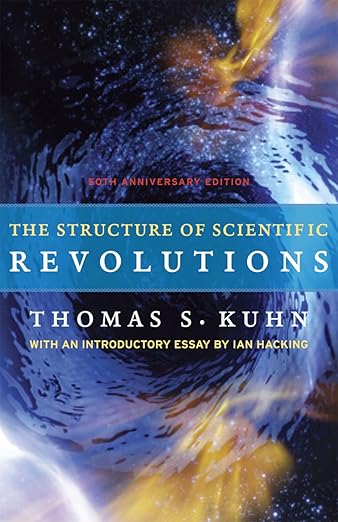





The Structure of Scientific Revolutions
Thomas Kuhn
A Cyborg Manifesto
Donna Haraway
Race After Technology
Ruha Benjamin
youngscientistsusa@gmail.com
© 2025. All rights reserved.
Connect with us
Young Scientists